
How many people have used the Pythagorean theorem in their day-to-day lives? I’m not particularly in a field that requires it, but I know that a² + b² = c² will be drilled into my head for the rest of my life, whether I use it or not. However, as I’ve moved from high school to college and into full-fledged adulthood, I can’t tell you how many times I’ve heard someone say, “I wish I was taught how to do that in school.”
We’re given a baseline of academic knowledge that many of us can still recite on command, like sleeper-spy phrases (“the mitochondria is—say it with me—the powerhouse of the cell”). But we’re often left with questions like: How do I do my taxes? How do I start building my credit score? And what in the heck does al dente actually mean?
I’m not saying I dislike students learning a comprehensive foundation across academic subjects. I actually believe it’s incredibly important. I just think we sometimes forget to teach students the life skills that help them figure out how to actually be people in the world. And if you’re reading this newsletter, it probably won’t surprise you to hear that I believe safety and self-defense skills should be considered one of those essential life skills (right alongside home ec and personal finance).
Self-Defense for Teens is a Life Skill
Over my seven years of teaching safety, self-defense, and violence prevention, I’ve worked with many teens. A couple of things remain consistent across these classes:
- Most students attend because their parents make them.
- Most students leave grateful that they were forced to attend.
Our world is changing quickly. There are some similarities between what teens experience today and what we experienced growing up, but there are also stark differences that can be hard for adults to fully comprehend. If you work with teens, have a teen, or regularly interact with teens, you already know this: there is no level of control or sheltering that can protect them from everything the world throws their way. And honestly, the teen years are meant to be a time of experimenting with freedom and responsibility and aren’t served by keeping them locked away.
That doesn’t mean, however, that we have to feel like we’re throwing them to the wolves. Just like with anything else, the tools and support we provide can empower teens to make effective decisions and problem-solve when challenges arise.
What Teen Self-Defense Actually Looks Like
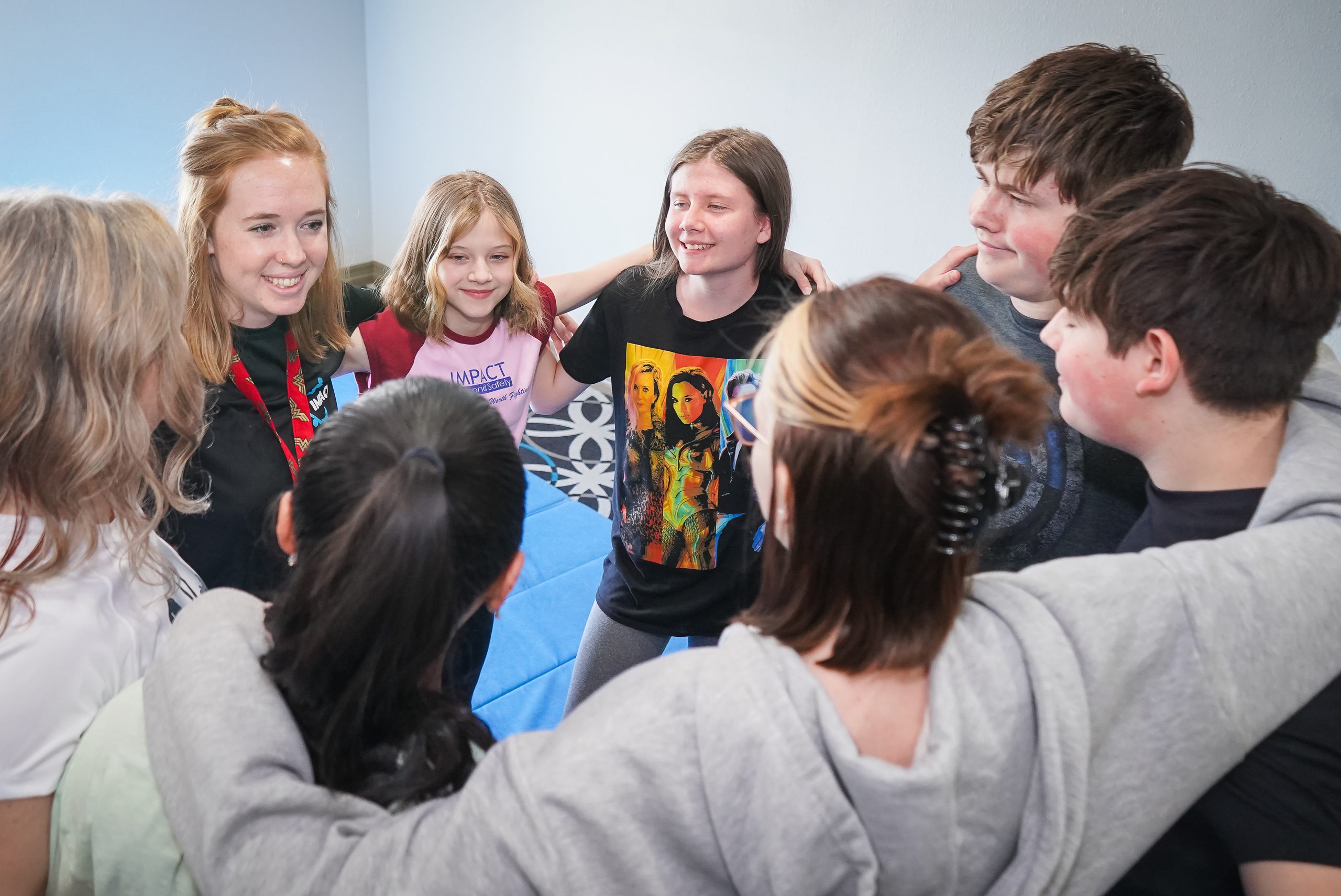
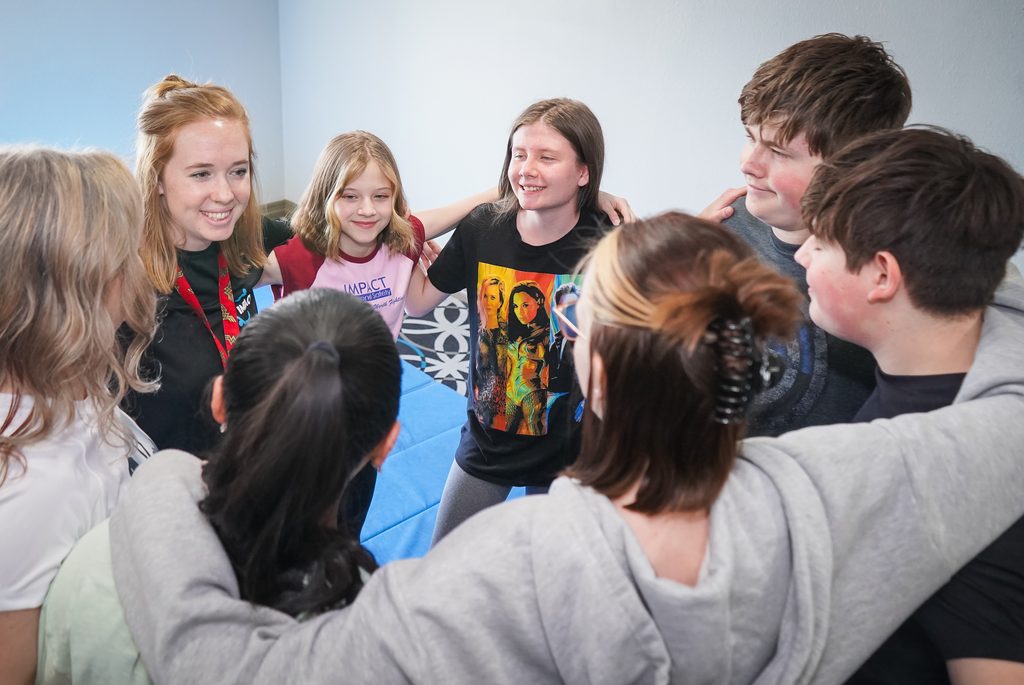
When most people hear “teach teens self-defense,” what they often translate that to is “teach teens how to hit.” And yes, physical skills matter. But this is where not all self-defense classes are created equal. Learning how to hit and yell “no” is valuable, but I also want teens to know how to set boundaries with friends who are making unsafe decisions. I want them to feel empowered to walk away from relationships that don’t treat them with respect. I want them to have the tools to advocate for their needs, stand up for others, and remove themselves from situations before things escalate.
This is the kind of self-defense teens actually need.
And it’s the kind of self-defense that shouldn’t exist only as an extracurricular option. Teens deserve a dedicated space where they can learn strategies and ask their questions, because they have questions. They are deeply aware of what’s happening in the world around them, and they want to know what to do. “What do I do if someone has a weapon? How do I get out of an unhealthy relationship? What do I do when I encounter something, or someone, scary? What are my rights when it comes to protecting myself from a violent attack?” Teen self-defense classes can provide a perfect place to explore these questions.
The best thing we can do is give them space to voice those concerns and practice skills that help them find solutions. And there are few places better suited for this than schools and afterschool programs, spaces that already exist to support, guide, and hold space for young people.
Teen Self-Defense Testimonials
See what some of our students and providers have said about having these classes in their school and afterschool programs:
“I learned many techniques for self defense like palm strike, how to release from someone. I like learning how to defend myself. It’s stuff I never knew. I liked how I was guided and not judged. Thank you, I learned a lot and felt comfortable.” (Teen School Program Participant)
“I learned many different ways to defend myself and how to do it in different situations. I like that there was time to ask questions and go over situations.” (Teen School Program Participant)
“Krista and Kayla from We Are Safer Together are incredible in their approach to self-defense. Their focus on situational awareness, communication tactics, and boundary setting supports the participating teens with confidence development, provides space to express themselves and ask thoughtful questions. Our participating families have found this program to be beneficial by giving parents peace of mind knowing the teen has learned skills to protect themselves. Many of the teens love having the opportunity to not only learn self defense techniques but shared excitement when given the chance to practice safely with mitts and pads. This program is one that is highly requested by both teens and parents as they always want to know when the next session is available.” (Afterschool Teen Program Provider)





Leave a Reply