This past November I traveled to Germany to facilitate two of our violence-prevention and empowerment training workshops for We Are Safer Together. I was both nervous and excited for the experience. I love to travel to new places, and I believe passionately in how we share our work with participants. But I couldn’t help having a little worry before I left Denver. How would I create a safe and inclusive space when I didn’t speak the primary language of most of the workshop participants? Would I understand the culture and language differences enough to provide effective safety training and skills? Our programming is rooted in creativity, inclusivity, safety, and empowerment, but would it all translate?
Empowerment Self-Defense Set-up
The first empowerment and safety workshop I taught in Germany was our “Empowerment Writing and Self-Defense” workshop at a scholarly conference about masculinity and gender violence in Latin American literature and culture. The organizers brought me in as an introductory team building session on the first evening of the event. Participants were of mixed genders, ages, and experiences, from students to distinguished writers and professors. They came from all over Europe, South America, and the United States.
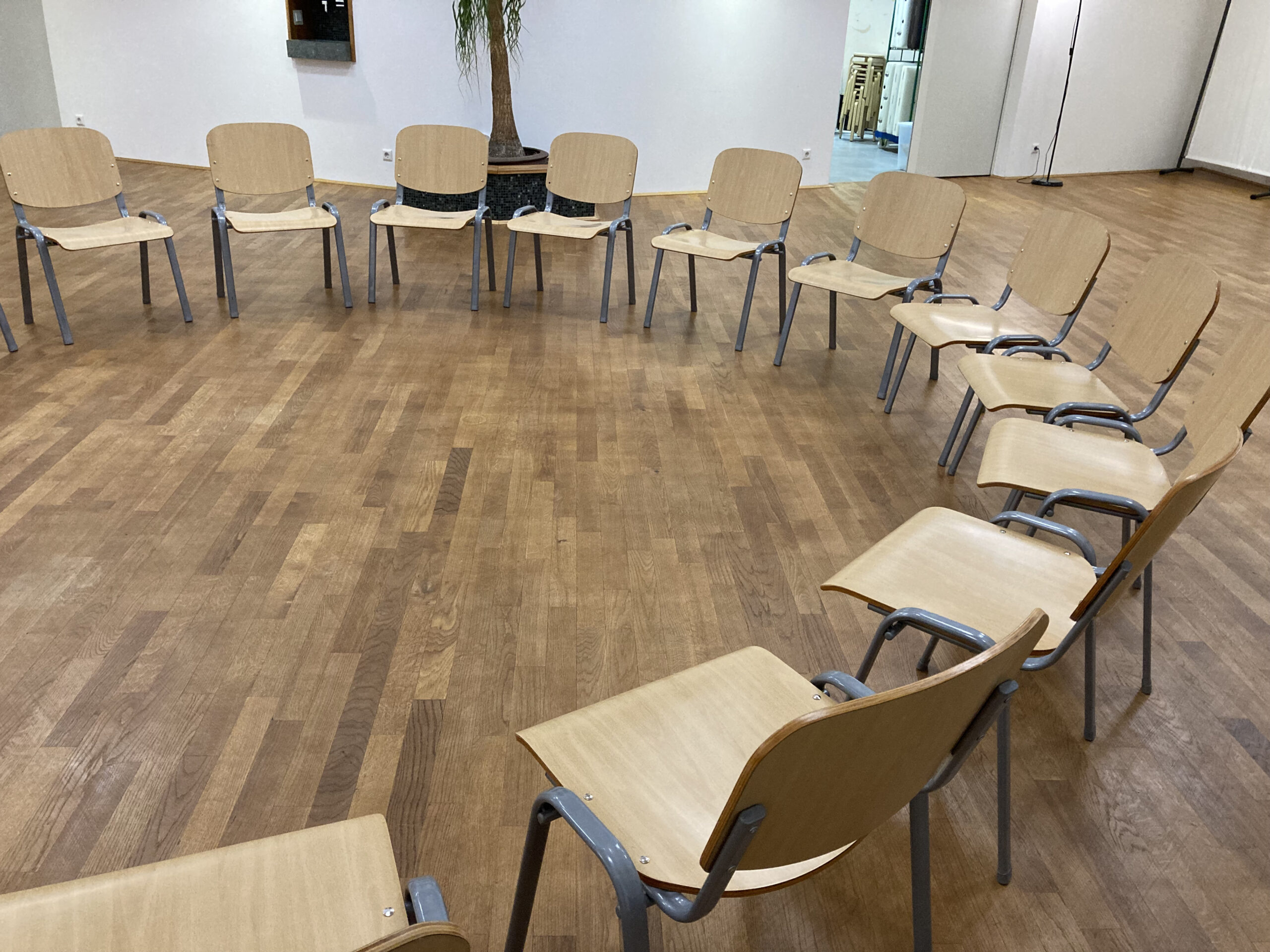
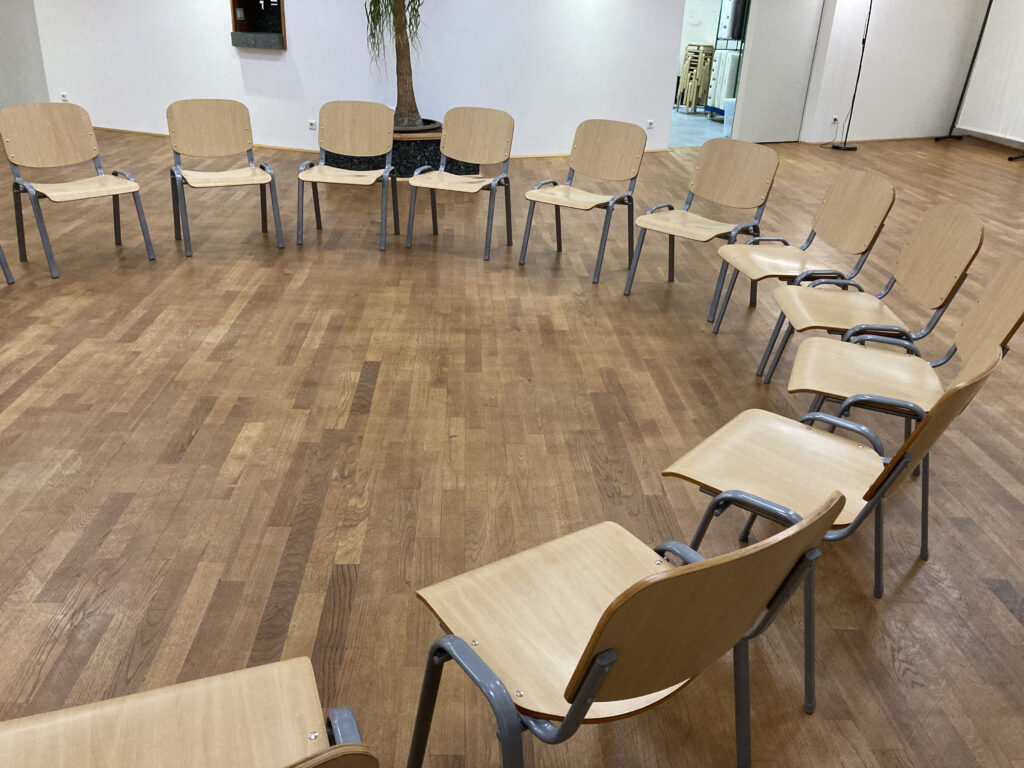
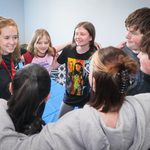
Before the workshop started, I used a tried-and-true ESD (empowerment self-defense) technique to set up the classroom by putting the chairs into a circle. I wanted to begin the session by creating an inclusive space where we were all equals, with shared opportunity to speak as peers. The circle becomes the container for the class, holding all of our collective knowledge and experiences.
We designed this class to be both self-reflective and active, with time for writing, discussion, group activities, and safety skills practice. I realized within a few minutes of starting that I need not have been nervous about the content “translating.” As we find every time we teach, there is something for everyone in our classes. These participants seemed to really enjoy using their voices and learning the physical techniques. The discussions were strong—of course, with a room full of scholars and writers—with some thoughtful deliberations about terminology, gender issues, and best practices.
Keeping the Circle Going
After the class, the organizer said the workshop really created a strong start to the conference. It provided a cohesive, teambuilding experience that the diverse members of the group could use as a touchstone throughout the sessions that took place the following two days.
After the session ended in the evening, the organizers re-arranged my large circle of chairs into more traditional rows of seating for the next day’s conference presentations. But mid-way through the next day, they put the chairs back into a circle. They told me that the circle had created such an equalizing and inclusive atmosphere the night before that they put the circle back in order to encourage the same type of atmosphere. It shows the power of the sharing circle!
I really was reminded through this workshop how much safety is a universal theme, especially for women, gender and sexually diverse people, people of color, trauma and war survivors, etc. We all have different experiences and lenses with which we view the world, and we all have our own ways of finding safety, but safety itself is a collective need.
Here’s what I’m thinking about after this trip: How can we help violence-prevention work become more widely understood and funded across the world? There is so much need, but so little in terms of real funding.
Soon I’ll be posting a Part 2 about my travels to Germany, covering the second workshop.


Leave a Reply