
This is the second blog about my experience teaching violence-prevention and empowerment training programs in Germany this November.
On my travels, I was reminded how universal the themes of violence prevention, safety, and empowerment really are. Even when we come from different backgrounds, speak different languages, and have different cultures, we all want to have agency over our lives and reside in safe communities.
The second workshop I facilitated was two days later in the town of Wuppertal as part of a month of empowerment-themed activities as part of a university student, migrant, LGBTQ, and women empowerment course. The organizers of this workshop really wanted to highlight the theme of empowerment, especially for people that may experience or have experienced violence.
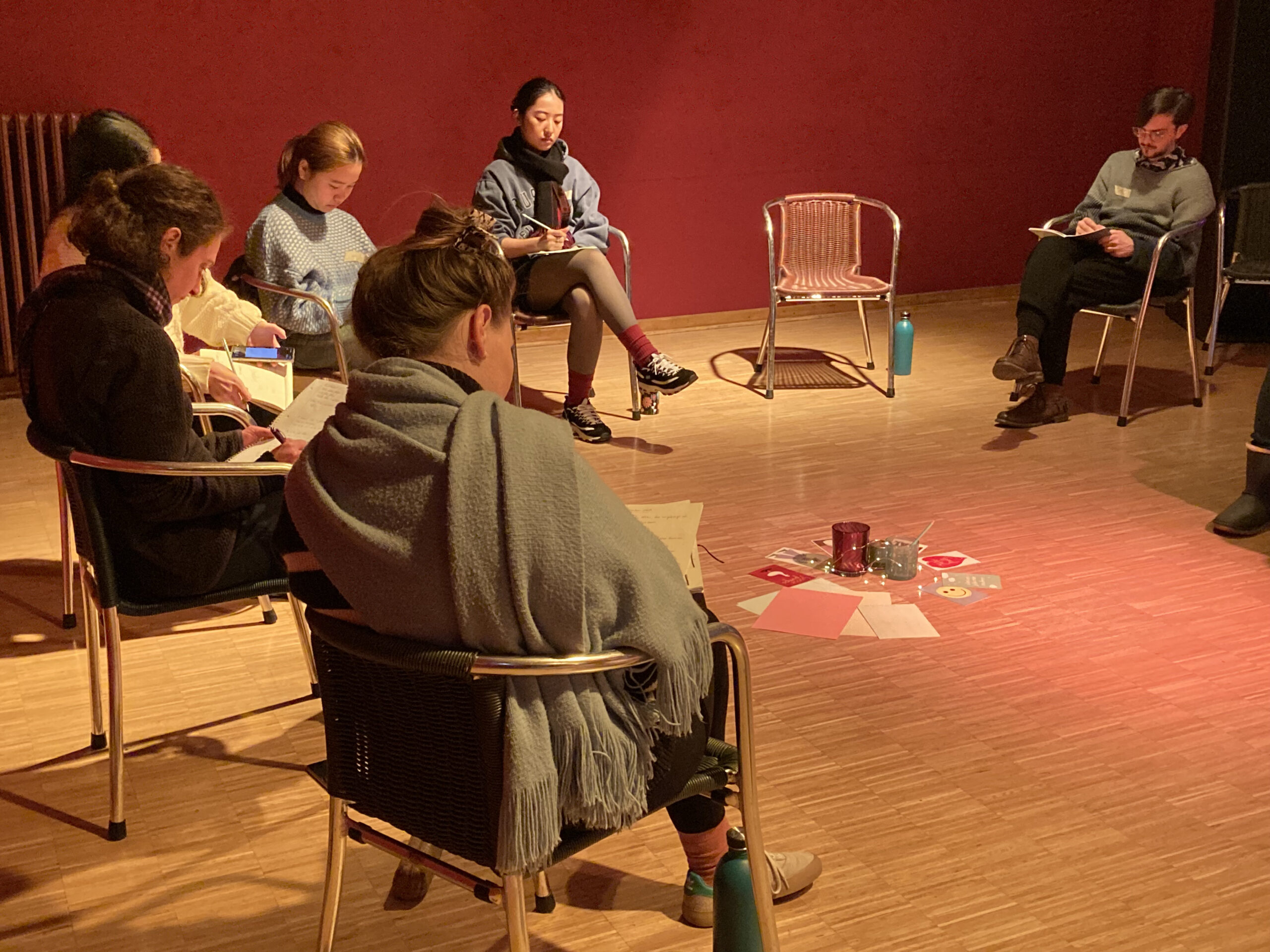
The location for this workshop was a community event center, in a room with a stage and set up like a nightclub or for a poetry reading. The lighting was warm, and the tables and chairs offered the ability for people to have their own writing spaces if they chose. We created another circle of chairs and set out some lights, inspirational postcards, and candle holders to focus on in the center. This really set the atmosphere for an inquisitive and thoughtful group.
Self-Defense for Everyone
I was pleased to see this workshop attracted diverse attendees from all over the world. They included students from Japan, a family from Columbia, a migrant from South Africa, and community members from Germany. Again, this workshop had a lot of language barriers—such as the students from Japan, studying in German, and taking this workshop that I taught in English.
Perhaps due to the language barriers, this group didn’t discuss as much as usual. But all of them seemed to enjoy the physical skills practice. The workshop provides a combination of internal reflection through writing, and outward-focused activities, discussion, and physical learning. In the writing exercises, participants are able to process their feelings or past experiences, or find creative outlets. Meanwhile, the discussion and activities help them find their voice and connect their body, brain, and senses. The defensive skills give participants the opportunity to feel powerful and confident.
Self-Defense for Instructors
At We Are Safer Together, we think it’s important for us, as facilitators, to learn something in every class we teach. We’re not there to give absolutes or to “should” all over people. We are there to help people reconnect to their voice, power, and skills that they had all along. Through flexible, inclusive, and trauma-informed facilitation, we create spaces where participants share, uncover, discover, and feel. We can only ask it of our participants if we too are vulnerable, open, and willing to learn.
In Germany, I learned how risk-taking is a vital part of growth and change. I took a risk going to Europe to teach these classes. It was a risk to create a program combining two seemingly disparate things, reflective writing and empowerment self-defense. Some may have thought it a risk to travel alone, in the winter, and to a place where I didn’t speak the language. What I learned came about through taking the risk to go. I learned even more how to hold spaces with diverse people—diverse in gender, culture, language, age, trauma history, and ability levels. Through every big and little risk that it took to teach workshops, explore the area, and take public transportation in Germany, I learned more about myself and the benefits of the work we believe in.
What are some ways you take safe risks in order to get out of your comfort zone?




Leave a Reply